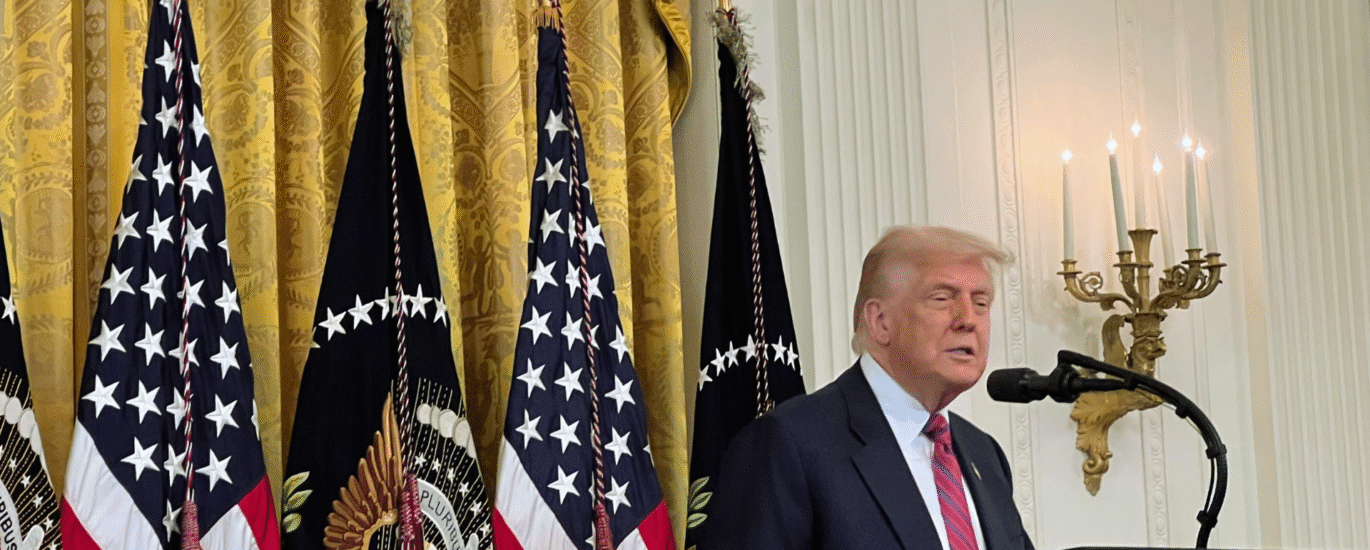
On July 18, 2025, former President Donald Trump officially signed the GENIUS Act into law — a groundbreaking bill that marks the first federal recognition and regulation of stablecoins in the U.S. crypto ecosystem. The move is being hailed as a watershed moment for digital finance, giving legitimacy to blockchain-based dollars while opening doors for enterprise-grade adoption.
But beyond the headlines, one stablecoin in particular may quietly benefit the most: Ripple’s RLUSD.
What Is the GENIUS Act?
The Guaranteed Electronic Notes Issuance for United States Stability Act (GENIUS) is a legislative framework designed to:
- Mandate 100% fiat or liquid reserve backing for all stablecoins.
- Enforce monthly audits and real-time proof-of-reserves.
- Require registration with U.S. financial regulators (like the OCC or CFTC).
- Ensure AML/KYC compliance and full interoperability with the banking system.
- Enable stablecoins to be used in federal settlements, remittances, and government procurement systems.
It is a compliance-first blueprint that draws a sharp line between transparent, asset-backed stablecoins and riskier, offshore alternatives.
Who Benefits? (And Why RLUSD Matters)
RLUSD (Ripple’s Stablecoin)
Ripple is already deeply embedded in banking, regulatory discussions, and cross-border finance. RLUSD — expected to launch fully in late 2025 — is built to be regulatory-compliant from day one.
Why it could be a big winner under the GENIUS Act:
- Fully backed by U.S. dollar reserves and short-term treasuries.
- Audited monthly by leading U.S. accounting firms.
- Built on the XRP Ledger, allowing instant, low-cost settlement.
- Integrated into RippleNet, which already connects hundreds of banks worldwide.
Expect RLUSD to become a go-to choice for financial institutions, especially those seeking a GENIUS-compliant settlement asset with deep liquidity and enterprise trust.
Other Major Beneficiaries
USDC (by Circle)
Already operating with strong reserves and transparency, USDC will rapidly expand into federal and institutional channels. Circle has even hinted at launching a GENIUS-certified USDC variant.
USDT (Tether)
While Tether dominates in trading volume, it may face hurdles due to its historically opaque reserve disclosures. Compliance with GENIUS could force greater transparency — or risk being excluded from U.S. institutions.
USD1 (World Liberty Financial’s Stablecoin)
Aligned with conservative U.S. policy circles and actively promoted within Trump’s orbit, USD1 may serve as a “patriotic stablecoin” for right-leaning fintech platforms and defense contractors.
Where XRP Fits In
Though not a stablecoin, XRP itself could benefit indirectly — especially as RLUSD scales on its native ledger.
Here’s how:
- Liquidity boost: RLUSD will pair naturally with XRP across exchanges and DeFi.
- Regulatory trust halo: Ripple’s close alignment with the GENIUS Act gives XRP a compliance-friendly image.
- Settlement synergy: XRP could act as the bridge asset between RLUSD and other global stablecoins or CBDCs.
- ISO 20022 compatibility: Both XRP and RLUSD are ISO 20022-ready, making them prime candidates for bank-to-bank tokenized settlement.
The GENIUS Act represents more than just another crypto bill — it’s a green light for innovation, with compliance built into the core. In a sea of digital dollars, RLUSD might just be the stealth juggernaut, quietly positioning itself as the financial engine powering tokenized money, banking, and international trade.
For Ripple and XRP holders, this isn’t just good news — it’s strategic validation.